
Menu
Vela Blog WiFi

Think You Need a Wireless Site Survey?

Three Words: Who’s on First?

Remember the old Abbott and Costello “Who’s on First?”  routine? Two people use the same words to mean completely different things, and the conversation spirals into hilarious confusion. The joke works because no one ever stops to clarify what the words actually mean.

In wireless design, that kind of confusion isn’t as funny.

We regularly hear from organizations that request a “Site Survey,” schedule one, and only later realize they needed something slightly or significantly different. No one was wrong. Everyone was simply using the same phrase to mean different things. And few terms cause more confusion than Site Survey.

We’ve written before about how Site Survey is a misleading term, but the confusion around the term itself continues to surface in conversations with customers.

So, What Is a Wireless Site Survey?

At its most literal level, a Site Survey simply means going onsite to collect data. That definition applies across industries. In construction, telecom, furniture layout, and beyond, a Site Survey involves visiting a location and gathering information.
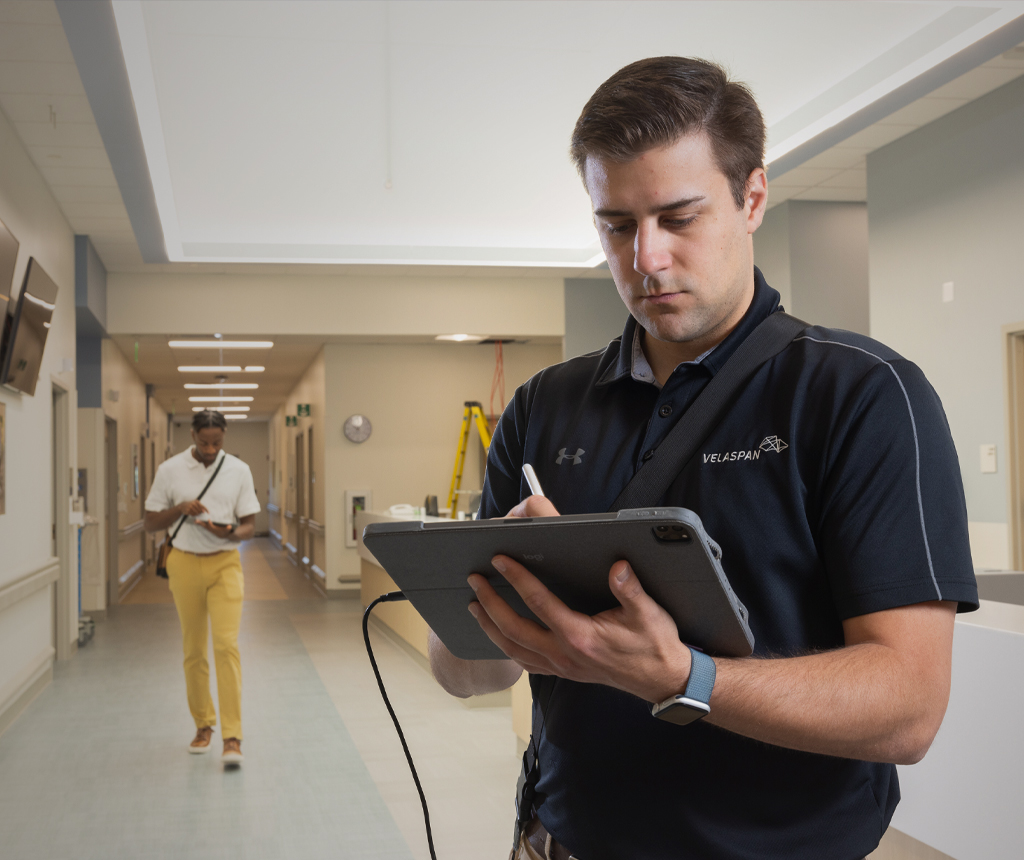
In wireless, however, many different services involve going onsite and collecting data. That is where confusion begins. For more than 25 years, when wireless engineers said, “Site Survey,” they were typically referring to what we now call network design for an existing building. Historically, that meant physically bringing access points onsite, testing coverage, and designing accordingly.

Today, modern wireless design is more nuanced. A wireless network design for an existing building usually includes Predictive Modeling, onsite AP-on-a-Stick testing, and a Post-Installation Site Survey after deployment. All of these activities involve collecting data. All could loosely be described as Site Surveys. But calling them all the same thing hides what actually matters: what are you trying to accomplish?

That is how you escape the “Who’s on First?” loop.

Do I Need a Site Survey for a New Wireless Network in an Existing Building?

If you are designing a brand-new WiFi network for an existing building, what you actually need is a Wireless Network Design. Some people still call this a Site Survey, but design is the more accurate term.

Today, wireless design is largely driven by predictive modeling. Engineers build a digital model of your space using tools like Ekahau, incorporating wall types, attenuation values, and building materials to simulate coverage. That model is then validated and refined using onsite AP-on-a-Stick testing.

When Predictive Modeling and onsite testing are combined, the result is a highly informed design model. That model becomes extremely valuable because it allows changes to be made virtually, after deployment, with confidence. If an access point needs to be relocated or coverage expanded, adjustments can often be evaluated within the model rather than through repeated onsite visits.

In certain cases, predictive modeling alone may be used. For example, the building may be small or simple, the location may be remote, or an onsite visit may not be cost-effective. The trade-off is important: without onsite testing, you lose the opportunity to collect detailed installation notes that guide cabling and mounting decisions, which increases the likelihood of post-deployment adjustments.

Notice what we didn’t say: you need a Site Survey. You need a design. That distinction matters.

Can You Perform a Site Survey for a Building That Hasn’t Been Built Yet?

If the building doesn’t exist yet, there is no “site” to survey. This is not a Site Survey. It is a predictive wireless design.

In this scenario, engineers rely entirely on architectural plans. Using those blueprints, they build a predictive model that estimates coverage and informs access point placement before the structure exists. Once the building is complete, onsite testing is performed to validate the predictive model. That onsite testing may sometimes be referred to as an AP-on-a-stick Site Survey, but it is one component of a broader design process.

Calling the entire effort a Site Survey misses the point. It is a staged design process that begins with modeling and ends with validation.

Again, clarity prevents confusion.

If My Wireless Network Isn’t Working Well, Do I Need a Site Survey?

If your network is only a few years old but is underperforming, you likely don’t need a new design. You need a WLAN Coverage Assessment.

A Coverage Assessment collects RF data from your existing network to understand how it is actually performing relative to how it was designed to perform. Sometimes the result is minor tuning. Sometimes it reveals deeper structural issues that justify a redesign. Either way, this is not the same service as a new wireless network design, even though it involves going onsite and collecting data.

Different problem. Different service.

Should WiFi Be Tested After Installation or Changes?

Anytime changes are made to a wireless network, whether during a new deployment or after adjustments to an existing one, coverage testing should follow. Some call this a Validation Survey. At Velaspan, if the changes were recommended by our team, we’d typically refer to it as a Post-Installation Site Survey. Otherwise, we would call it a Coverage Assessment as we aren’t testing against our design.

Call it whatever you like. Just do it. Testing after changes ensures that what was designed is what was delivered.

Back to “Who’s on First?”

The entire Abbott and Costello routine hinges on one thing: no one ever pauses to define the words. If someone had simply clarified what “Who” meant, the confusion would have ended. (But for comedy’s sake, we’re glad it didn’t!)

In wireless, we don’t have the luxury of miscommunication for the sake of entertainment. “Site Survey” means conducting onsite data collection. That definition is accurate, but it is far too general to be useful on its own.

The question isn’t, “Do I need a Site Survey?” The better question is, “What problem are we trying to solve?” Once that is clear, the right set of services becomes clear, too. And the conversation stops sounding like a comedy sketch.


If you’re asking whether you need a “site survey,” you might be asking the wrong question. Let’s start with the problem you’re trying to solve — and design the right solution from there.

Still Here?

We're glad you stuck around...

Check This Out

Stay ahead of Cyber Criminals with ACE: Active Cyber Engagement

Deception Technology is Here

Be empowered by a Cellular Coverage Assessment

Click for Case Study

How can we help?

We design, deploy, and manage enterprise wireless networks and cybersecurity solutions for leading businesses and brands. Which option best describes your project?

WiFi
Cellular
Cybersecurity

Let's Find Out
What Your Network Needs.

Just answer a few quick questions and receive some immediate thoughts on a plan for your wireless network. No cost or commitment, you might even learn something along the way!

Next

New or Existing Network?

Maybe your existing WiFi network needs work — or maybe you need a new network built from the ground up. In either case, Velaspan's experience and expertise ensure optimal WiFi connectivity and ROI.

Which best applies to you?

Planning for a new network
Make current network better

For You or a Client?

Velaspan works with a wide range of global businesses AND some of the best IT solution providers worldwide. Are you looking for a network for your own company — or are you a solution provider looking to partner with us to support your client?

I need WiFi for my company
I'm designing for a client

About Your Business

Your business has needs and challenges that are uniquely yours and we'll need a real conversation to address them all! However, we work with clients in virtually every industry, so a few key details can give us a solid starting point to assess your needs.

What industry best describes your business?

Enterprise
Education
Pharmaceutical
Healthcare
Retail
Sports & Entertainment
Manufacturing
Logistics
Industrial

One Facility — or More?

Scalability and size are key factors in WiFi design. A network spanning multiple buildings or facilities requires added consideration around scalability, interoperability, and consistency.

What scenario best describes your project?

Just one facility
Multiple facilities

Your Environment

Today's businesses need comprehensive networks designed for security, connectivity, and longevity — with a close eye on what's on the horizon.

Designing yours starts by understanding your space, which we realize might be vast and varied. Which best describe your physical environments?

When shaping minds, anywhere can be a classroom — if it's connected. Whether your school is inside four walls, outdoors, something else, or all of the above, we've got your wireless covered.

Which best describe your school, campus, or facility environments?

Often global and always complex, pharmaceutical operations require high-performance wireless across labs, cleanrooms, boardrooms, and more.

Delivering it starts by understanding your space. Which best describe your physical environments?

Healthcare is high-stakes, 24/7, and ever dependent on wireless — demanding a strong signal across every square inch of space.

Designing a network that stands up to your needs starts by understanding that space. Which best describe your healthcare facility's physical environments?

From in-store points of sale to e-commerce, retail is increasingly dependent on high-performance wireless for operations as well as customer experience.

A successful network starts by understanding the complexity of your space. Which best describe your company's physical environments?

From fan livestreams to broadcast signals to record-breaking crowds, venues and visitors need winning wireless.

Designing and delivering it starts by understanding your space. Which best describe your venue or facility's physical environments?

Vast, hazardous, and teeming with movement, manufacturing spaces are tough to design for — and one of our specialties.

Our work starts by better understanding your space, which often takes different forms across uses. Which best describe your physical environments?

Your business can't afford dead spots or a weak signal — but is probably ripe with them.

Designing wireless that stands up to supply chain demands starts by better understanding your starting point. Which best describe your physical environments?

Whether you're a refinery or a confectionary, you probably face connectivity hurdles — often in hazardous areas, no less. Luckily, industrial connectivity in classified zones is one of our specialties.

Network design starts by understanding your space, which we realize might take different forms across uses. Which best describe your company's physical environments?

Select all that apply:

Next

Existing or Proposed Space?

Is this WiFi network being designed for an existing facility/space, or one that's in the works? It's never too early to get us involved. Whether your network is going into an operational space, you're adjusting for a remodel, or if the ink is still fresh on the blueprints — we can work with you.

Existing building
Remodeling or repurposing
New construction

What Problem Are You Facing?

Looking to make your network better? Great, that's what we do! Which of the following best describe your current challenges?

Select all that apply:

Poor coverage
Unstable connections
Outdated equipment
New requirements
Next

How Old Is Your Network?

A network's age tells us a lot about its lifecycle needs. When was your current network installed?

It's brand new
1-3 years ago
4+ years ago
Not sure

Hardware Vendor

Velaspan is vendor agnostic and we don't sell hardware. It means your network's success is our only focus, i.e. no sales agenda!

We work with all major hardware vendors and can choose the best one for your network if you haven't already. Who do you work with — or are you still deciding?

Cisco
Meraki
HP/Aruba
Extreme Networks
Juniper/Mist
Haven't decided yet
Other

Your Contact Information

Thanks for sharing, we have a good understanding of your project and are ready to recommend relevant services. Of course, this is just the start of the process. Enter your contact information below and one of our WiFi experts will reach out to help.

One Step Closer to Better WiFi!

Based on your answers, we'd likely kick off with the following services:

Some other services that would likely apply:

We'll be in touch! Explore our cybersecurity solutions in more detail here.

Let's Determine Your Cellular Needs.

Just answer a few quick questions and receive some immediate thoughts on a plan for your cellular network. No cost or commitment!

Next

Does Your Cellular Project Involve Carrier Coverage or Your Own Private Network?

Cellular projects can vary based on whether you're focused on improving existing carrier signals or exploring a private network solution for your operations.

Which of these best describes your current focus?

Establishing a private network for our operations
Improving or assessing coverage from existing carriers

Do You Have a Developed Use Case for Your Private Network?

Some businesses come to us with a clear idea of how they want to use a private network (like for autonomous vehicles or real-time tracking), while others are still figuring out the best way to leverage this technology. Where are you in the process?

We have a clear use case
We're still in the planning stage and exploring our options

Have You Identified the Current State of Your Cellular Signal?

Understanding the state of your cellular coverage can be tricky. You might be looking for a full assessment to understand your signal quality, or you might already know there are areas that need improvement. Where do you stand?

We are looking to understand our current signal quality
We already know there are areas with poor coverage that need fixing

What Industry Best Describes Your Business?

Understanding the environment in which your cellular network operates helps us tailor the solution to your specific needs. Whether you're in manufacturing, healthcare, or education, each industry has unique challenges that require a customized approach.

Which industry best describes your business?

Warehousing
Manufacturing
Education
Healthcare
Construction
Mining
Retail
Chemical, Gas, and Oil
Ports and Maritime
Other

Your Use Cases

In warehousing, efficiency and connectivity are crucial for operations like inventory management, automation, and logistics. A private cellular network ensures seamless mobility for devices like AGVs, handheld scanners, and yard management systems. Which of these use cases best fits your needs? And if you're not sure, that's okay too!

In manufacturing, reliable communication and automation are key to maintaining productivity. Private cellular networks support connected systems like robotics, IoT infrastructure, and real-time monitoring, enabling more efficient production and safety. Which use case best aligns with your needs? Not sure? That's perfectly fine too!

Education environments require reliable connectivity for student devices, smart building systems, and security. A private cellular network ensures seamless connectivity across campus, supporting everything from surveillance systems to IoT-enabled learning tools. Which of these use cases fits your needs? If you're not sure, don't worry; we've got you covered.

In healthcare, secure and consistent connectivity is essential for managing patient data, communications, and medical devices. Private cellular networks enable real-time monitoring, mobile access, and secure communications across large hospital environments. Which of these use cases best fits your needs? And if you're unsure, no problem!

Construction sites often face connectivity challenges across large, rugged areas. Private cellular networks provide reliable, secure connections for everything from push-to-talk communications to tracking heavy machinery and IoT sensors. Which of these use cases aligns with your project? And if you're not sure, that's okay too!

Mining operations need secure, reliable connectivity in remote or underground locations. Private cellular networks ensure continuous communication and monitoring, whether it's through rugged devices, IoT sensors, or surveillance systems. Which use case best aligns with your needs? And if you're not sure, that's understandable!

In retail, reliable and fast wireless connectivity is key for transactions, inventory management, and customer experience. Private cellular networks ensure your operations run smoothly, whether it's handling POS systems or managing stock across locations. Which of these use cases best fits your needs? And if you're not certain, don't sweat it!

In the chemical, gas, and oil industries, safety and monitoring are critical. Private cellular networks provide secure, uninterrupted connectivity for field operations, IoT monitoring, and communications in hazardous environments. Which of these use cases best fits your operations? If you're not sure, no worries!

Ports and maritime operations require large-scale, seamless connectivity to manage logistics, cargo, and communications. Private cellular networks enable real-time tracking and monitoring across large areas, ensuring smooth and secure operations. Which of these use cases best describes your needs? And if you're not sure, that's perfectly okay!

Every business has unique connectivity challenges, and a private cellular network could provide the secure, reliable solution you need. Whether you're managing IoT infrastructure or improving onsite communications, we can tailor a solution to your needs. Which of these use cases best fits your business? And if you're not quite sure, that's totally fine!

Select all that apply:

Next

Your Contact Information

Thanks for sharing, we have a good understanding of your project and are ready to recommend relevant services. Of course, this is just the start of the process. Enter your contact information below and one of our cellular experts will reach out to help.

One Step Closer to Better Cellular!

Based on your answers, we'd likely kick off with the following services:

Some other services that would likely apply:

We'll be in touch! Explore our cellular solutions in more detail here.

Let's Determine your Cybersecurity Needs.

Answer a few questions to receive immediate insights into your cybersecurity needs. No cost or commitment, just actionable advice

Next

What Industry Best Describes Your Organization?

Every organization needs protection, but the specific challenges you face can depend on what kind of business you're in. Whether you're keeping customer data safe, managing critical infrastructure, or just trying to make sure no one clicks that suspicious email link (again), understanding your environment helps us offer solutions that fit your needs.

So, which industry best describes your business?

Pharmaceutical
Manufacturing
Education
Healthcare
Finance
Media/Entertainment
Retail
Enterprise
Government
Other

What's Your Cybersecurity Focus Right Now?

Cybersecurity can be a bit like juggling — sometimes it's about figuring out where you're vulnerable (and making sure everything stays in the air), and other times, it's about getting those defenses ready to catch any unexpected curveballs. Whether you're more about assessing the risks or gearing up for action, knowing your focus helps us guide you to the best solution.

Which of these feels most like your current approach?

Understanding and assessing risk
Defending and responding to potential threats

What's Your Priority?

Assessing and understanding risk can take a few different paths. Maybe it's all about the human element — making sure your team knows the difference between a legitimate email and a phishing scam. Or perhaps you're more into giving your systems a good onceover, tightening up those security bolts, and making sure everything's squeaky clean. Which of these sounds more like your current concern?

Ensuring your staff follows best practices
Evaluating and strengthening your security hygiene

What's Your Priority?

Keeping the bad guys out can take a lot of forms (and sometimes feels like fighting an army of digital ninjas). Whether you're looking to beef up your defenses, spot attackers hiding in the shadows, or make sure your security tools are quick and easy to set up, we want to know where you're focusing your efforts. Which of these sounds most like your priority?

Select all that apply:

Align Security Posture
Following CISA, NIST, MITRE, etc.
Securely and Actively Detect Attackers
Kick intruders, protect IT/IoT/OT
Deep Visibility
See what's happening right now
Add Key Skills and Capabilities
Expert support, fully integrated
Speedy and Easy Deployment
100% software, cloud/on-prem/hybrid
Rapid Response
Playbooks and support for quick action
Next

Your Standards

In the pharmaceutical industry, protecting intellectual property, patient data, and maintaining regulatory compliance are critical. The standards (HIPAA, GDPR, ISO) might sound like they're from another planet, but they matter. Which ones does your organization follow? If you're not sure, no worries!

Manufacturing organizations often handle a mix of proprietary data, operational technology, and supply chain information, making them a target for various cyber threats. Of course, the security standards you need to follow can feel like a confusing alphabet soup (ISO, NIST, CMMC, anyone?). Which standards or frameworks do you currently follow in your manufacturing environment? And if you're not sure, that's okay too!

Educational institutions manage a wide array of sensitive information, from student records to financial data, making them an attractive target for cyberattacks. Security standards can help — even if they sound like an endless string of acronyms (FERPA, NIST, ISO). Which cybersecurity standards or frameworks do you adhere to within your institution? Not sure? That's perfectly fine too!

Healthcare organizations face unique challenges when it comes to securing patient information, complying with regulations, and maintaining the integrity of healthcare services. With so many standards (HIPAA, ISO, NIST — it's a lot, we know), it's crucial to keep track. Which security and compliance frameworks does your healthcare organization follow? If you're not sure, don't worry; we've got you covered.

The finance sector deals with highly sensitive financial information, making it a prime target for cybercriminals. To protect client data and ensure regulatory compliance, implementing the right standards is essential — even if they sound like a bunch of acronyms (PCI-DSS, ISO, GDPR). Which standards guide your organization's practices? And if you're unsure, no problem!

Media and entertainment companies manage everything from intellectual property to consumer data, requiring strict security measures. The standards you might follow (ISO, PCI-DSS, GDPR) can feel like a code only decipherable by cybersecurity experts. Which ones apply to your organization? And if you're not sure, that's perfectly okay!

Retail businesses handle a vast amount of customer data and payment information, requiring strict security measures to prevent breaches. The standards (PCI-DSS, GDPR, ISO) can feel like a jumble of letters, but they're crucial. Which security frameworks do you follow in your retail operations? And if you're not sure, that's okay too!

Enterprises often operate in complex environments, dealing with sensitive information across multiple systems. The alphabet soup of standards (ISO, NIST, SOC) can help guide your security strategy — but we get it, it's a lot to keep track of. Which frameworks do you follow? And if you're not certain, don't sweat it!

Government agencies manage critical and sensitive information, making them prime targets for cyber threats. Adhering to security standards (CMMC, FISMA, NIST) is essential — but sometimes, it can feel like deciphering a code. Which frameworks does your agency follow? And if you're not sure, that's understandable!

Whatever your industry, we know there's no shortage of acronyms when it comes to cybersecurity standards (ISO, NIST, GDPR, and the list goes on). Which standards or frameworks do you currently follow? And if you're not quite sure, that's totally fine!

Select all that apply:

Next

How Does Your Organization Manage Compliance with Security Standards?

Staying compliant with security standards can be a daunting task, and every organization approaches it differently. Whether you have a streamlined system or feel like you're swimming against the current, we'd love to know how you manage compliance. Pick the option that best describes your approach (no judgment here — we promise!).

Badly
(we know we should be doing more, but...)
Manually, with not enough people
(we could use a few clones)
Manually, with way too many people
(and somehow it's still chaotic)
With an automation platform
(we've got this covered...mostly)
A mix of automation and manual processes
(because, why not both?)

Your Contact Information

Thanks for sharing, we have a good understanding of your project and are ready to recommend relevant services. Of course, this is just the start of the process. Enter your contact information below and one of our cybersecurity experts will reach out to help.

One Step Closer to Better Cybersecurity!

Based on your answers, we'd likely kick off with the following services:

Some other services that would likely apply:

We'll be in touch! Explore our cybersecurity solutions in more detail here.

Slow down, let me explore
Start over
Schedule a Call

A Business is Hacked

Velaspan’s Active Cyber Engagement (ACE) changes everything.

Learn how we're outsmarting them with cutting-edge deception technology, overseen by expert cybersecurity professionals.

Watch Video
Every 14 seconds...